
Design guide for a safer Oxford
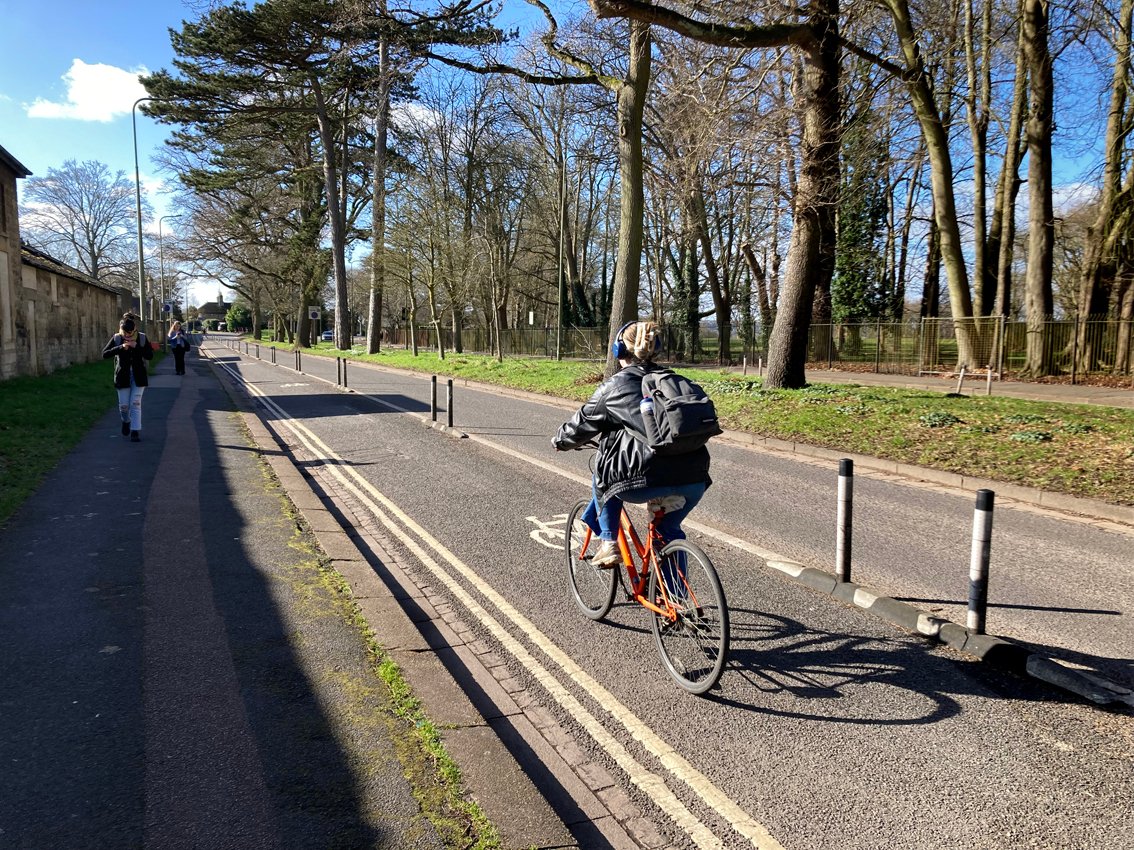
Cyclox has launched a design guide to help create a city where more people can cycle, more often and more safely.
Why do collisions happen?
There are all kinds of factors that contribute to collisions, for example not obeying the Highway Code, texting while driving, driving while intoxicated. But many injuries and deaths occur because roads, junctions and cycle paths have been badly designed.
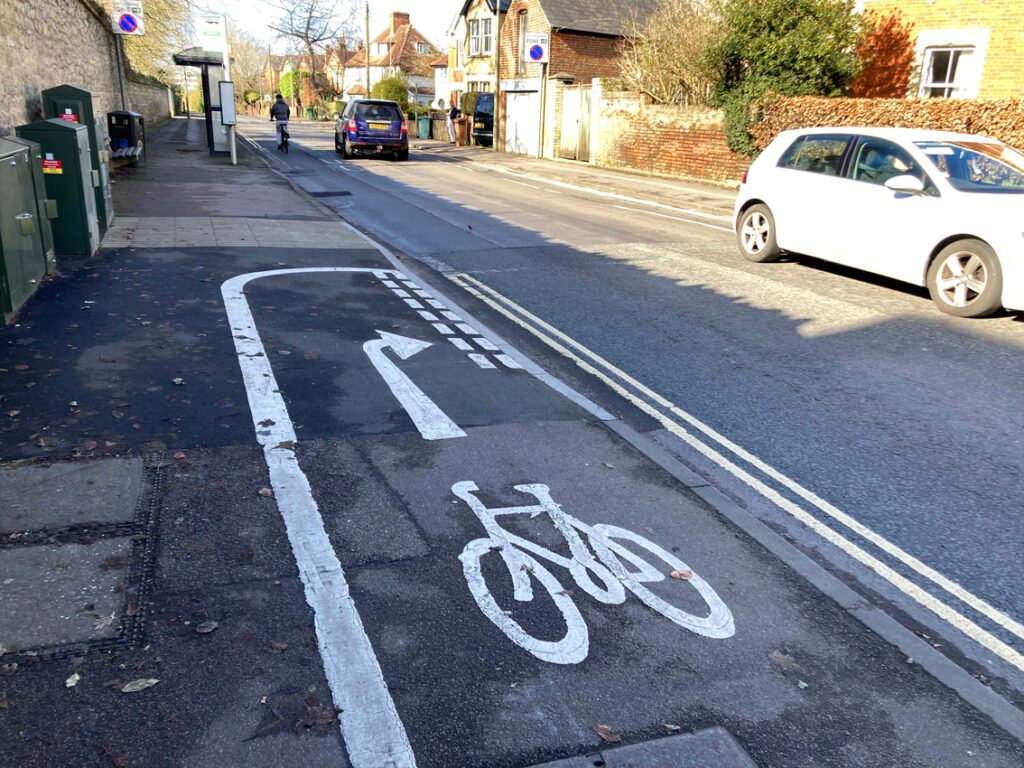
What happens to the cyclist when the cycle path disappears?
Bad design can be fatal
In September 2021 Jenny Wong died when an HGV turned left from London Road into Headley Way (Headington) across the cycle lane she was on. Cyclox campaigns for HGVs to have better cameras and mirrors, eliminating their blind spots, but improved infrastructure can also help with this. The layout at the junction where Jenny died encourages people cycling to ride on the left of large vehicles that are turning left, but they may then be in the vehicle’s blind spot.
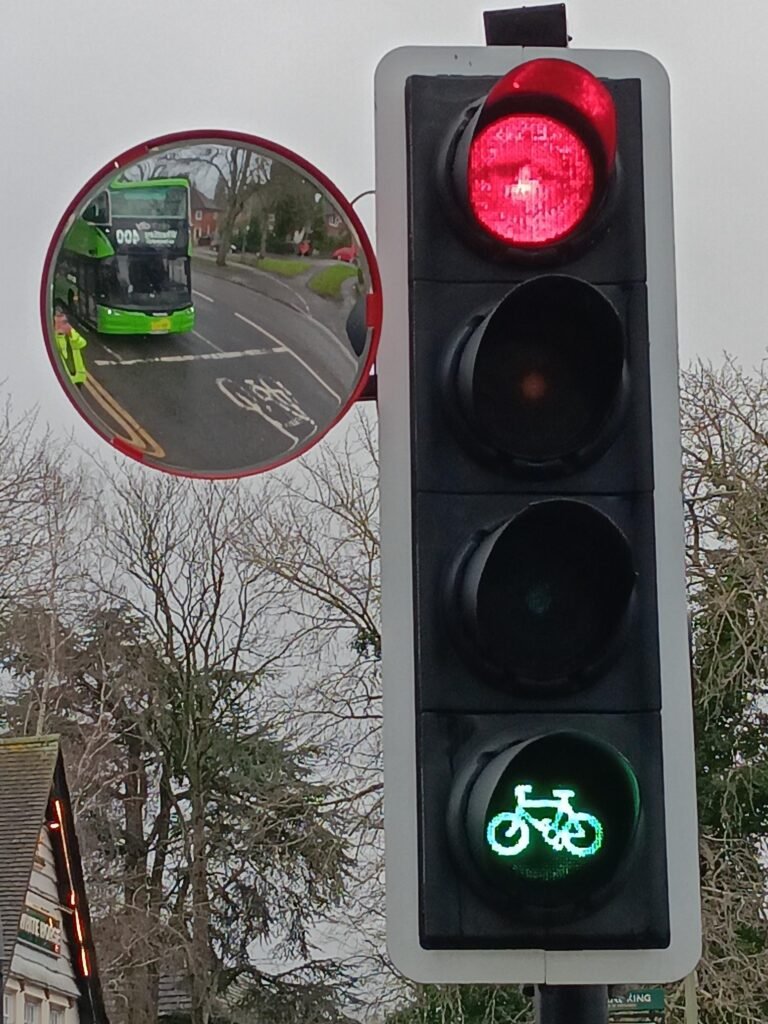
Since the inquest into Jenny’s death in August 2022 we’ve been campaigning to make that junction safer. We are delighted that Oxford’s first Trixi mirror has now been installed at the junction. This convex mirror, attached to the traffic lights, allows vehicles to see cyclists, and pedestrians, on their left-hand side.
Oxford’s first Trixi mirror has been installed at the junction of London Road and Headley Way in Headington, making it easier for left-turning vehicles to see cyclists on their near side
What is the design guide?
Our design guide is intended both to prevent dangers occurring and to help fix existing problems.
Cyclox’ infrastructure group advocates for better cycling infrastructure by commenting on plans, working with our local councils, sitting on the Vision Zero group working to reduce deaths and serious injuries to zero, responding to consultations and running specific campaigns. Until now, it has not set out its principles, solutions and standards all in one place.
The design guide is a reference point for the infrastructure group itself, and for any organisation planning changes to a road layout or development of new transport infrastructure. It covers in detail issues of safety and inclusivity, design of cycle routes and cycle lanes, and cycle security. Want to know our stance on e-bikes, cycle parking, speed limits or shared cycle/pedestrian space? This is where to find the answer.
Think like someone who cycles
We want planners and developers to consider the questions most people ask before they cycle:
- Do I feel safe to cycle?
- Are there barriers preventing me cycling?
- Can my child cycle here?
- Is there a good cycle route to my destination on quieter roads or routes with good cycle lanes?
- Are the cycle lanes fit for purpose? Good surfaces, separated from traffic, no obstacles?
- Can I lock my bike up at my destination and know it will be there when I come back?
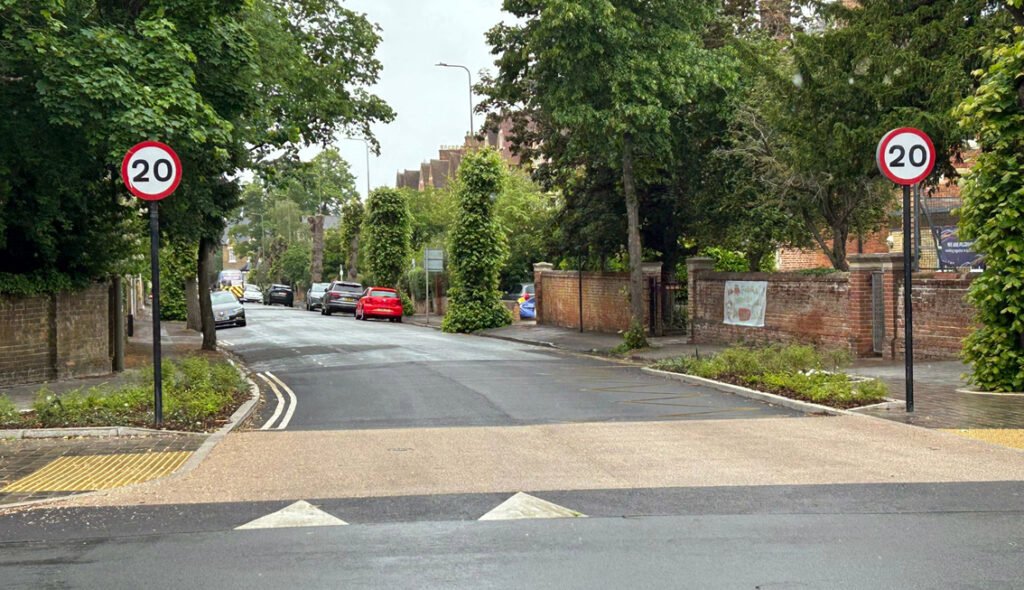
It’s too easy to design infrastructure for a smooth flow of motor traffic without considering people walking and cycling. For example, a wide entrance to a side road may make it easier for cars to turn without slowing too much, but it can double the distance a pedestrian has to cross, increasing the time they spend at risk. An easy turn also makes it less likely that drivers will look for cyclists on their near side.
Who is the guide for?
The guide is for anyone involved in road safety, road infrastructure or new development in the city.
Let’s make Oxford worthy of the title A Cycling City.
